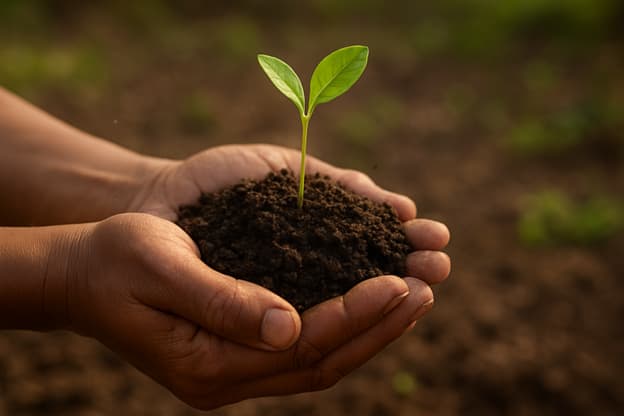
Soil health is the foundation of agriculture, but increasing cases of salinity and toxicity are degrading farmlands across the world. Saline soils and toxic contaminants reduce crop yields, weaken soil fertility, and threaten long-term sustainability. Conventional solutions such as chemical amendments or excessive irrigation are costly and often harmful in the long run.
In this context, neem (Azadirachta indica) has emerged as a natural ally for farmers. Known for its pesticidal, medicinal, and soil-restoring properties, neem offers eco-friendly solutions to reduce soil salinity and detoxify contaminated land. This blog explores the role of neem in reclaiming degraded soils, how it works, and practical ways to apply it in agriculture.
Understanding Soil Salinity and Toxicity
Soil salinity occurs when salts like sodium chloride, sulfates, or bicarbonates accumulate in the root zone. High salinity makes it difficult for plants to absorb water, leading to poor germination, stunted growth, and nutrient imbalances.
Soil toxicity results from heavy metals, industrial pollutants, chemical fertilizers, or pesticide residues. Toxic soils reduce microbial activity, harm plant roots, and eventually lower crop quality and safety.
Both problems are on the rise due to climate change, poor irrigation practices, and excessive chemical use. Neem provides a sustainable method to combat these issues by improving soil structure, reducing harmful ions, and supporting natural detoxification processes.
Why Neem Is Effective for Soil Health
Neem has been valued for centuries in Indian agriculture, not only as a natural pesticide but also as a soil enhancer. Its effectiveness lies in:
- High organic content – Neem cake, leaves, and mulch add valuable organic matter to soils.
- Bioactive compounds – Azadirachtin, nimbolide, and quercetin enhance microbial diversity and suppress harmful organisms.
- Adsorptive properties – Neem biomass can bind salts and heavy metals, making them less harmful.
- Sustainability – It is renewable, widely available, and cost-effective for farmers.
Neem’s Role in Reducing Soil Salinity
- Improving Soil Structure
When neem cake or neem compost is applied, it increases the organic matter in soil. This improves aggregation, reduces crusting, and enhances aeration. Well-structured soils allow water to percolate deeper, carrying excess salts away from the root zone. - Boosting Water Retention and Leaching
Neem increases soil porosity, which improves both moisture holding and drainage. In saline regions, this supports gradual leaching of salts, lowering electrical conductivity (EC) and reducing salinity stress on plants. - Balancing Soil Ions
The slow decomposition of neem releases organic acids that buffer soil pH and facilitate ion exchange. Harmful sodium ions (Na⁺) are displaced by calcium (Ca²⁺) and magnesium (Mg²⁺), improving soil fertility and reducing sodicity. - Supporting Beneficial Microbes
Neem stimulates microbial populations that produce exopolysaccharides, substances that bind soil particles and help flush salts away. A thriving microbial ecosystem accelerates the recovery of saline soils.
Neem’s Role in Reducing Soil Toxicity
- Heavy Metal Immobilization
Neem leaves, bark, and biochar have a strong ability to adsorb heavy metals such as cadmium, lead, and arsenic. These metals are bound to organic matter, reducing their solubility and preventing uptake by crops. - Detoxification of Pesticide Residues
Neem cake acts as a chelating agent, binding toxic residues and converting them into less harmful compounds. It also promotes microbial growth that breaks down chemical pollutants naturally. - Enhancing Soil Microbial Balance
Toxic soils often suppress beneficial microbes while allowing harmful organisms to thrive. Neem introduces bioactive compounds that suppress pathogens and restore microbial diversity, creating a healthier soil environment. - Stabilizing Contaminated Soils
Neem’s deep root system and biomass contribute to soil stabilization, preventing erosion and reducing the spread of contaminants. When combined with salt-tolerant or metal-absorbing crops, neem creates favorable conditions for phytoremediation.
Practical Applications of Neem in Agriculture
- Neem Cake as Soil Amendment
- Apply neem cake (by-product after oil extraction) at 2–5 tons per hectare.
- Incorporate it into the soil before planting.
- Over time, it releases nutrients, suppresses pathogens, and reduces salinity stress.
- Neem Biochar
- Produced through pyrolysis of neem residues, neem biochar is porous and has a high cation exchange capacity.
- When applied at 5–10 tons per hectare, it immobilizes heavy metals and retains nutrients, making it especially useful in contaminated soils.
- Neem Leaf Mulching
- Fresh or composted neem leaves spread as mulch enrich soil organic matter.
- Mulching regulates soil temperature, conserves water, and reduces surface salt accumulation.
- Neem-Integrated Cropping Systems
- Neem amendments can be combined with salt-tolerant crops or grasses.
- This integration enhances phytoremediation and improves overall soil recovery.
Conclusion
Neem is more than just a natural pesticide—it is a soil healer. By improving soil structure, enhancing microbial activity, balancing ions, and binding harmful contaminants, neem addresses two of the most pressing challenges in agriculture: salinity and toxicity. Whether applied as neem cake, biochar, or mulch, this eco-friendly solution helps reclaim degraded soils, boost crop yields, and promote sustainable farming practices.
For farmers and agricultural researchers, neem is a proven, low-cost, and natural way to restore soil fertility and protect the environment. By integrating neem into soil management practices, we take a step toward healthier land and resilient food systems.